What is Food Noise & How to Quiet It
Food noise has become a very popular term lately. While women (and some men, too!) have been experiencing it for decades, there’s finally a term to describe that constant preoccupation with food, and you may finally feel seen.
Food noise is exhausting and can take over your life. It can keep you from being present with your kids, connecting at a family gathering, or even enjoying a vacation. For many women, food noise takes up so much mental real estate that they don’t have the capacity for other things they enjoy.
Understanding why you experience food noise and how to stop it can really change your life.
What Is Food Noise?
Food noise doesn’t have a single definition, and you may experience food noise a little differently than another person. But at its core, food noise is persistent, intrusive thoughts about food that feel impossible to silence.
Researchers who have studied this concept describe it as heightened or persistent reactions to food cues (which can be internal or external) that lead to ongoing food-related thoughts and behaviors.
It’s more than the normal thoughts about food like, “What should I eat for dinner?” or “I’m hungry, what should I have for a snack?” It’s repetitive mental chatter that dominates your attention even when food isn’t physically present.
What Does Food Noise Sound Like?
Food noise can sound like a lot of different things — ranging from intense cravings followed by guilt for eating the chocolate, to mentally calculating calories, to second-guessing every food decision.
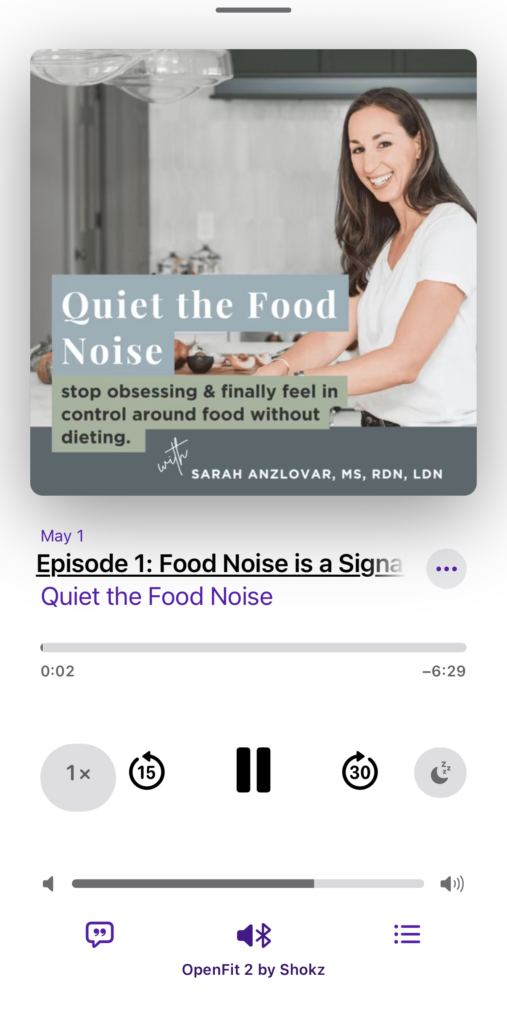
In episode 1 of my 6-part podcast series Quiet the Food Noise, I talk through all of the different ways I’ve seen my clients experience food noise (and how I used to experience it before I was finally able to quiet it myself).
Cravings
A lot of women I work with call food noise cravings. It’s that 3pm pull toward the pantry. The need for chocolate or something else sweet after every meal.
The constant awareness that there’s something in the kitchen calling your name, and the feeling that you won’t be able to focus until you have it.
For many women these cravings feel physical and urgent, but they’re often driven just as much by under-eating, restriction, and stress as by true hunger.
Mentally Calculating Calories, Points, or Macros
For some women, food noise is constant mental math and the gymnastics that goes along with it. You add up the calories in your coffee, mentally tally the points in your lunch, or calculate whether you have enough carbs “left” for dinner.
Even healthy foods enjoy come with a running tab in your head, and forget actually enjoying the cookie (because you’re adding up numbers while you eat).
This kind of constant math keeps food front and center in your mind all day long, and it’s exhausting. If this is you, here’s how to stop counting calories.
Always Thinking About What’s in the Pantry
You hid the chocolate on the top shelf all the way in the back to get it out of sight, but it’s never really out of mind.
You’re always thinking about what you have on hand, when you can eat it, if you eat it, how you’ll need to make up for it. You always feel like you just have to get the food out of the house so you can stop thinking about it.
This can also look like showing up to a party and only focusing on the food table.
If you think about food all day long, here’s how to stop.
Food Guilt
For a lot of women, food noise shows up as guilt. You eat the cookie, then spend the next hour (or rest of the day) replaying it, telling yourself you “shouldn’t have,” and planning how you’ll make up for it.
If you often feel guilty after eating, read more here on how to lessen the guilt.
Constantly Second-Guessing What You’re Eating
You wake up and food is immediately a stressor: What can I eat? What should I eat? Do I have what I need, or do I need to go to the store? (And you don’t want to go to the store, because you’ll end up buying things you don’t need.)
It’s a constant battle of where am I going to eat, how much am I going to eat, what food will be there? The decisions never seem to stop.
Emotional Eating
You stress eat, turn to food for comfort, use it as a procrastination tool, eat when you’re bored to fill the void, and so on. You look ahead at your schedule, see a stressful meeting, and you’re already thinking: what chocolate do I have, and will I be able to eat it after the stressful meeting?
What Causes Food Noise?
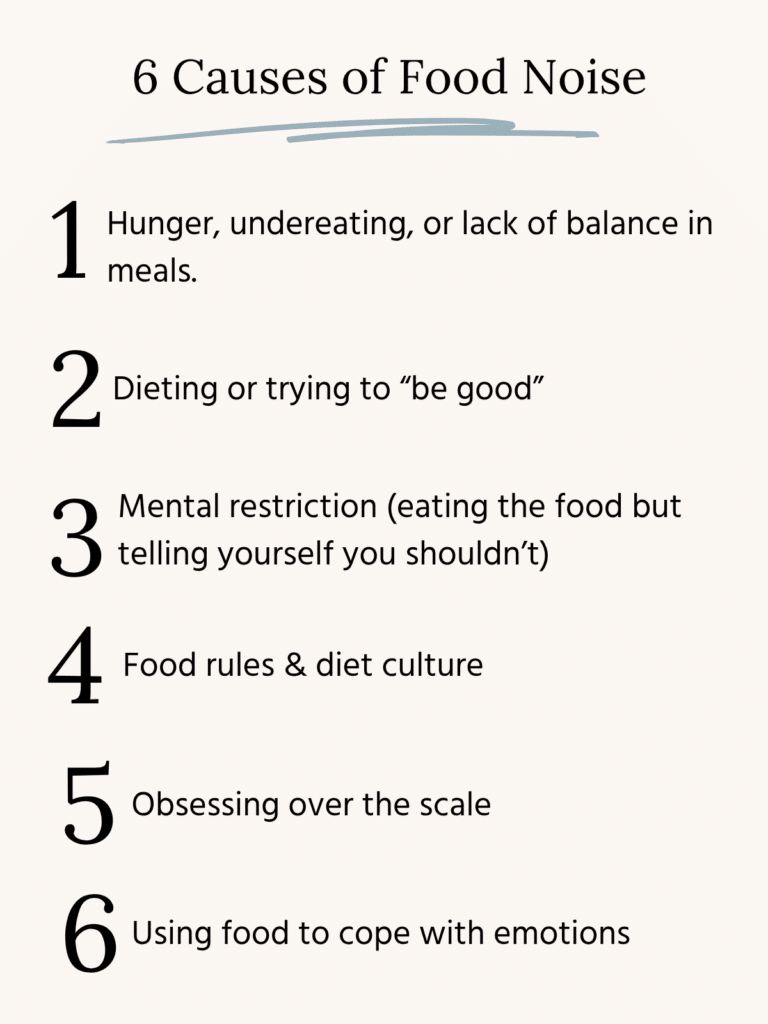
You’re not born with food noise! It usually develops from a mix of biological, psychological, and cultural influences. Here’s how some of the most common drivers show up in research and real life.
Hunger & Under-Eating
When your body isn’t getting enough fuel, your brain turns up the volume on food thoughts to make sure you seek nourishment.
This is well-established in the research. In a landmark study known as the Minnesota Starvation Experiment, men who were put on a semi-starvation diet of roughly 1,700 calories a day—yes, that was considered starvation!
These men became intensely preoccupied with food, from planning meals to combining ingredients in their minds. This shows how biological deprivation can take over your thoughts, and this is super common among women following 1,200-1600 calorie diets.
To learn more about how hunger and under-fueling cause food noise, listen to episode 2 of my podcast series Quiet the Food Noise.
Dieting
You might notice that dieting can temporarily quiet food noise because the rules give structure and take some of the guessing out of eating. But over time it backfires.
Research shows that dieting is associated with more repetitive, negative thoughts around food, and that this kind of rumination partly explains why people who diet experience more out of control eating and emotional eating.
Episode 3 of my podcast series Quiet the Food Noise digs deep into how dieting and even just trying to “be good” can turn up the food noise significantly.
Mental Restriction
Mental restriction is often what drives guilt and shame after eating something. You’re not technically restricting — you eat the food — but you feel like you shouldn’t.
Or you ate more than you think you should have. This may come from leftover diet rules (see below) or just a belief that certain foods are bad or should be limited.
Ironically, once my clients rewire their thoughts around food and stop mental restriction, not only does food noise quiet, but they reach for those foods far less often and feel more in control.
Food Rules & Diet Culture
Even if you’re not dieting right now, food rules you’ve collected from dieting, or even just from living in diet culture, live rent-free in your brain whether you want them to or not.
These rules lead to a lot of second guessing, questioning, and calculations around every food decision. They contribute to guilt and are a huge driver of food noise.
Focusing on the Scale
Most people who experience food noise want to lose weight. It makes sense! Because when you’re trying to lose weight, it feels like every food decision is loaded. You’re constantly thinking, “Am I on track? Did I mess up? Will this derail everything?”
In order to quiet the food noise, we need to shift from focusing on the scale to taking care of your body. That doesn’t mean forgetting about weight loss forever, but if you want to quiet the food noise, it often does require taking a step away from the scale for a bit.
Emotional Coping With Food
Emotional eating is often habitual. When you regularly turn to food to cope with stress, sadness, or anxiety, it becomes an automatic response, and that pattern can drive a lot of the food noise you experience.
You need to learn to rewire the automatic patterns that drive emotional eating and the drive toward food when you’re stressed or bored.
We dig deep into this in episode 5 of the Quiet the Food Noise podcast series (click to listen!).
How to Quiet Food Noise
The good news is that it’s very possible to quiet the food noise. For some people, it’s faster than they expect, just by fueling their body adequately.
Often we also need to layer on mindset work, which is what I do with clients in the undieting process.
Eat Enough
When your body’s needs are met, your brain doesn’t have to keep reminding you that it needs fuel (with thoughts about food & cravings). Consistent eating minimizes the biological trigger for obsessive food thoughts.
Build Balanced Meals (Protein + Fiber + Fat)
Eating meals with protein, fiber-rich carbs, and fat helps balance blood sugar and increase feelings of fullness, which naturally quiets food thoughts and reduces cravings.
Ditch Food Rules & Scarcity Thinking
The more you give yourself permission around food, the less mental energy you spend policing your choices. This shift directly counteracts the psychological loop built by dieting and restriction.
Move Your Focus Off Weight Loss
When weight loss is the goal, every bite gets scrutinized and food thoughts get loud. Shifting toward how food makes you feel (energy, satisfaction, strength) loosens that pressure and quiets the mental chatter.
Prioritize Sleep
Sleep is a powerful regulator of appetite hormones like ghrelin and leptin, and poor sleep makes both cravings and food thoughts louder. Aim for 7–8 hours of quality sleep per night.
Learn Emotional Coping Skills
Food noise can be a symptom of unmet emotional needs. Research on emotional cravings shows that when food becomes a coping tool, your mind returns to it again and again. Building other ways to soothe stress, boredom, and overwhelm helps break that cycle.
Ready to Quiet the Food Noise?
Listen to the full podcast series Quiet the Food Noise to Stop Obsessing and Finally Feel in Control around food (click the image below to listen). 6 episodes, 6-8 minutes each. Totally free.
Should I Take a GLP-1 to Quiet Food Noise?
Disclaimer: the following is not medical advice, and any decisions about medications should be discussed between you and your healthcare provider.
You’ve probably heard people say that GLP-1 receptor agonists (like Ozempic) “quiet the food noise.” There’s early research suggesting these medications may dampen the brain’s response to food cues and reward, making both hunger and the pull toward food feel less urgent.
But they don’t erase the emotional and behavioral drivers of eating. But many people find a GLP-1 turns the volume down without changing their emotional eating or their need for something sweet after every meal.
Quieting that kind of food noise takes the same tools we’ll talk about below, whether or not you’re on a medication. Plus, some people find GLP-1s can even turn the food noise up a bit, because when your appetite is low you have to focus on getting adequate nutrition and making every bite count.
Listen to episode 6 of Quiet the Food Noise, where we dig deeper into GLP-1s and food noise.
Final Thoughts on Food Noise
Food noise feels loud and relentless because your brain is responding to a mix of biological signals, psychological patterns, and cultural influences. But it doesn’t have to run your life.
With nourishment, permission, and the right tools, it’s absolutely possible to quiet the mental chatter and reclaim all of the brainspace currently filled up with food.
This is exactly what we help our clients do. If you can’t go another day obsessing about food and are ready for an expert to help guide you in quieting the food noise while also taking care of your body and health, book a free call to learn more about working together.